Practical Info
For anything we've not covered elsewhere - and with a little repetition of the most important points.
About
- A quick introduction
Why Tear-Aid®?
- Why indeed !
Some useful stuff
- Specs, formats and further information
FAQ
- Questions we are frequently asked
Testimonials
- What others say (rather than take our word)
Why us?
- What we offer
Staying power
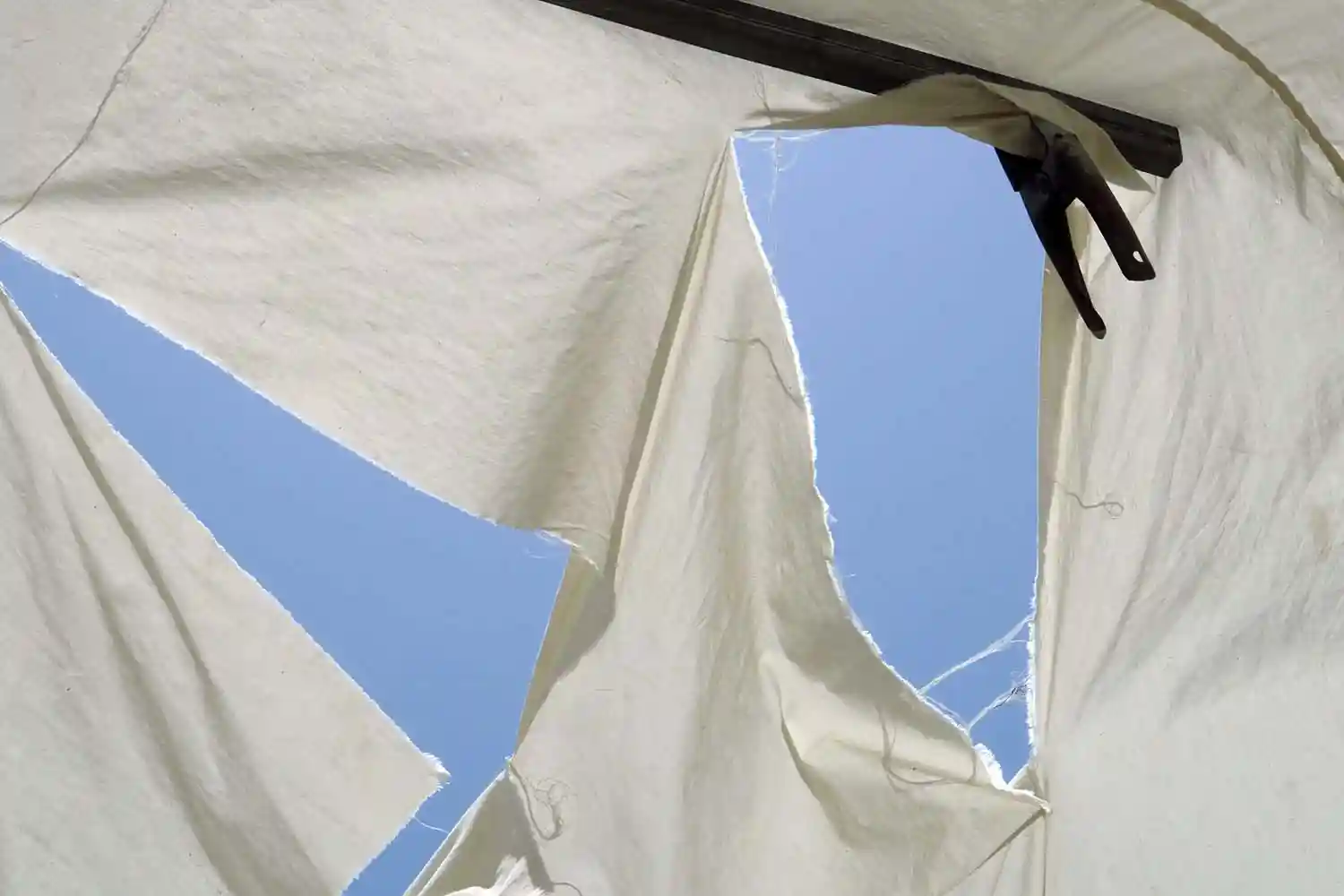
Tear-Aid® tapes have been holding things together since the beginning of the century!
Testimony to how incredibly resilient Tear-Aid® is.
Did we think it would be sticking around for all these years and for those to come?
Perhaps not, but one cannot fail to be impressed by the versatility – and the staying power – of Tear-Aid®.
Why Tear-Aid®?
Repair, reuse, repurpose
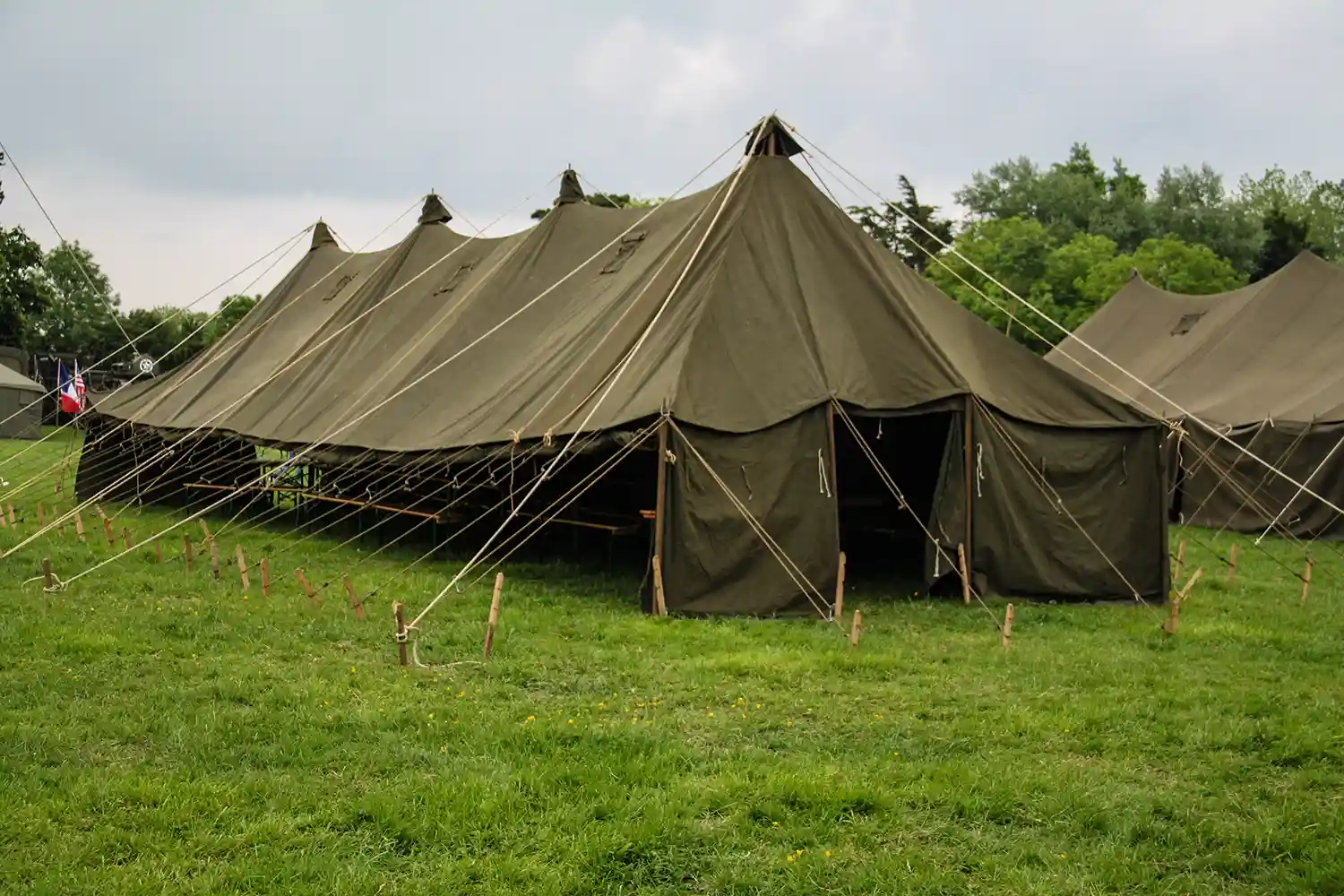
You might find yourself in the middle of nowhere, whereby if you don’t repair your gear straight away, either it will get worse or fail completely. Whether we’re talking about your waterproofs, your sleeping bag, your tent outer, your drinks container or your rucksack, if you don’t fix it, at the very least you’re in for a miserable time – and the very worst might just be you putting your life on the line.
I’d never get on my bike without making sure I have a couple of Tear-Aid® patches and a bike pump on me, in case I get a puncture. A kit weighs next-to-nothing, takes up virtually no space at all, yet it could save me hours of pushing my bike back home!
Similarly, before you decide to fill up your garden swimming pool, make sure you’ve some Tear-Aid® Type B to hand in case it has developed a leak since last year. Waiting for the postman to deliver your pack AFTER discovering the leak could cost a lot in lost water.
Reduce waste and carbon emissions
Fixing stuff is always satisfying. You save loads of money, extend your gear’s life, and set an example to others who hopefully will do the same.
After all, nothing’s cheap these days, so if you can make your stuff last, then go for it! (And save up for some quality things down the line when you finally have to take your old stuff to the recycling depot).
If you’re an avid outdoor enthusiast, preferring the technical properties of synthetic fibres over natural fibres, you already know too well just how vulnerable these expensive lightweight fabrics are to rubbing, thorns, ripping, etc. Patching them up before a hole becomes a tear becomes an unintended ventilation opening just seems to be a no-brainer, especially as you can do it on the fly!
Every time you repair an item, that’s less carbon you’re throwing into the atmosphere and less stuff ending up in landfill to rot (or break down into nanoplastic particles as the case may be…).
Help nature, help the planet
Prolonging the amount of time before your things finally pop their mortal coil and make their way to the great tip in the sky (or rather the incinerator or the landfill site or, worse, the ocean or the ice caps – we exaggerate not…) has got to be in the interests of every living creature on this planet.
Global supply chains and fast fashion give the impression that we can all live as if there was no tomorrow, that everything will all work out in the end.
Well, here’s the surprise!
At the rate we are going, and the manner in which we consume the earth’s resources and energy – there won’t be anything left to consume soon, and we’ll all be more concerned with how to survive Mother Earth’s wrath!
If your stuff breaks, tears, punctures or in any other way lets you down, then repair it. If it is beyond repair, dispose of it responsibly, preferably by recycling it, then buy responsibly.
Some useful stuff...
Product formats
In case we’ve not said it enough, Tear-Aid® is available in two types:
- Type A is designed to repair most synthetic and natural fabrics with the exception of vinyls and PVC;
- Type B is designed to repair PVC and vinyls.
- 1 1/4″ (32 mm approx.)
- 3″ (75 mm approx.)
- 6″ (150 mm approx.)
In addition, we also supply patches:
- 7/8″ x 7/8″ (22 mm x 22 mm approx.)
- 1 3/8″ x 1 3/8″ (35 mm x 35 mm approx.)
General specifications
Tear-Aid® is a durable, elastic, airtight, watertight, puncture-resistant industrial-strength patch that protects against abrasion, moisture, saltwater, UV sunlight and extreme temperatures.
Once applied, Tear-Aid® can resist ambient temperatures of between:
- -30 °C and +60 °C in the case of Type A, and
- -30 °C and +90 °C in the case of Type B.
Under normal conditions, Type A achieves 90% of its full bonding strength within 10 minutes of it being applied, and 100% within one hour. It is NOT repositionnable once it has been applied.
On the other hand, Type B takes longer to reach its full bonding strength (50% immediately it is applied, 100% 24 hours later). It is repositionable for a short period of time, and curing can be accelerated by carefully heating the patch.
Handle with care and avoid touching the glued surface.
For more information
Full, comprehensive instructions are supplied with every Tear-Aid® product we sell.
If, however, we have not answered your question here, then do not hesitate to get in touch.
Our contact details can be found at the bottom of every page on our website. You can also use our contact form which is available by clicking here.
We welcome any and all constructive feedback on the information provided on our website.
If you have used Tear-Aid® on any unusual or novel applications, then let us know. We welcome all your feedback and experiences on using Tear-Aid®.
Finally, if you are interested in opening a trade account or have a volume inquiry, then we would be very pleased to hear from you.
Faq
This is where we try to cover those questions which our customers often raise regarding the use and suitability of Tear-Aid® products.
Throughout this website and on the instructions that accompany our products, we mention the very wide-ranging types of materials Tear-Aid® can – and occasionally cannot – fix.
However, this information is far from exhaustive, which is why it is often best to test our products before committing. You can buy our test kit by clicking on this link.
If after looking through our website, you still cannot find the answer to your question, then either message us using our contact form (available here), or telephone us on 02 53 44 05 37 (international callers please telephone either +33 2 53 44 05 37 or +44 1228 808060).
The Tear-Aid® Type B patch is reserved for repairs on vinyl, PVC, and products coated with vinyl or PVC. If the layer in contact with the patch is either vinyl or PVC, you must use the Type B patch.
The Tear-Aid® Type A patch is intended for repairs on cotton, canvas, rubber, neoprene, nylons, most fabrics, plastics, Sunbrella®, Gore-Tex®, Sympatex®, eVent®, Cordura®, polyethylene, polypropylene, polyurethane, and leather (provided it has not been treated with oil, soap, or grease), acrylics, fiberglass, aluminium, polyester, Hypalon®, Dacron®, etc. If the layer of the product you wish to repair is made from one of these materials, you should use the Type A patches. In all cases, do not use Type A on vinyl or PVC.
As your repair involves combining two “incompatible” materials, it is rather unique. In this case, you should proceed as follows:
First, apply Tear-Aid® Type B (for vinyl materials only) to the vinyl part of the item to be repaired. Apply the Type B patch only to the vinyl, not to the cotton canvas.
Next, apply your Tear-Aid® Type A patch to the canvas THEN onto the Type B patch you have just placed on the vinyl, so that the Type A patch overlaps both the canvas to be repaired and the repaired vinyl.
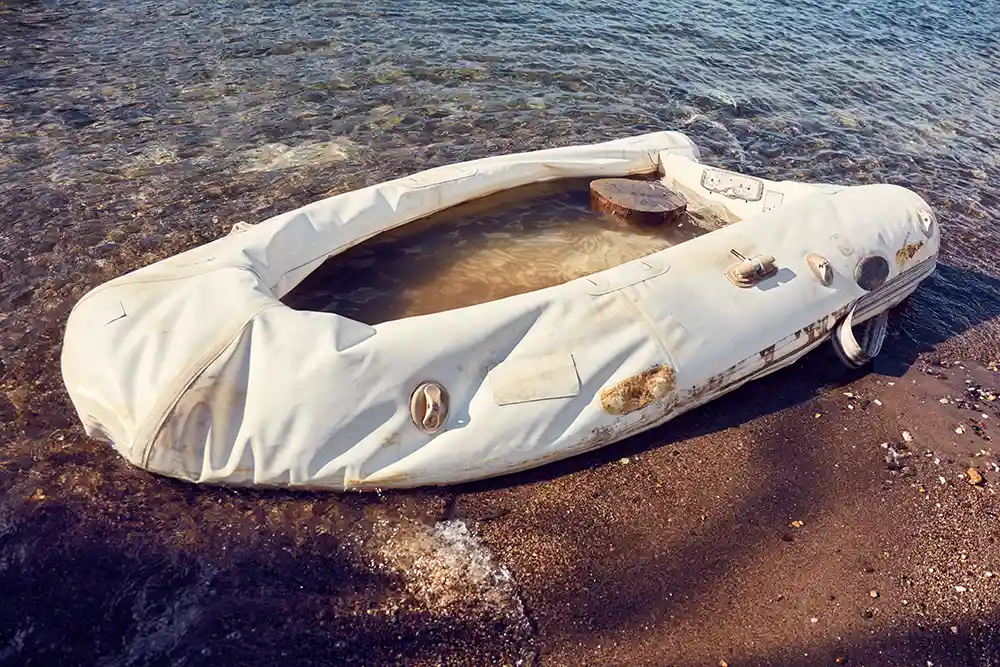
Tear-Aid® is certainly capable of providing a watertight or airtight repair on all kinds of inflatables. However, it is difficult to create a perfectly airtight seal when repairing a tear on—or through—a seam, as air can pass through the seam itself.
In this case, we would recommend using a liquid seam sealant applied to the stitching, following the manufacturer’s application instructions to the letter.
Once the sealant is fully cured, you can then apply Tear-Aid® over the whole area, to reinforce the repair.
If the surface is submerged under water or saturated with water, only the Type B patch can be used, but it is still best to apply the patch to dry surfaces. If applying to a wet object, use a squeegee (provided in our underwater vinyl repair kits available in-store) to expel water or air bubbles between the patch and the vinyl/PVC. Continue to rub with the squeegee for several minutes to encourage good adhesion between the patch and the material being repaired.
Type A patches should always be applied to surfaces that are dry and free from water, oil, or dirt.
Never use a Type A patch on vinyl. Vinyls contain oils that, over time, react with the adhesive used for Type A and make it sticky. Eventually, the patch will come off the vinyl. Therefore, only use the Type B patch for vinyl or PVC surfaces, as the adhesive used on the Type B patch has been specially designed to adhere to vinyl and PVC.
It is very important to know the material you are repairing before starting the repair. If you don’t know it, you have two options:
- Either contact the manufacturer of the item to find out the material;
- Or purchase our test kit, which consists of two Tear-Aid® mini-patches, one Type A patch of 22 mm² and one Type B patch of 22 mm². When you apply both patches to the same item, one of them will stick permanently, allowing you to identify which type of patch you need.
We recommend washing your raincoat by hand. Temperature is not the main concern, as our Type A patches can withstand temperatures ranging from -30°C to +60°C. You should instead take care to wash only the polyurethane side and avoid wetting the adhesive side. If you allow water to reach the adhesive side, the patch may come off. If possible, it is best to avoid washing a repaired item.
A fabric that is porous and can absorb water risks losing its repair patch. In this case, avoid washing the item. If you notice the patch starting to peel at the edges while washing the item, let it dry, then reapply the patch.
Of course. It is absolutely possible to carry out this type of repair underwater without emptying the pond by using Tear-Aid® Type B patch. You just need to purchase our underwater repair kit (available by clicking here) specially designed for pool and pond liners, etc., which includes a squeegee to expel water or air bubbles between the patch and the liner, thus ensuring perfect adhesion.
However, a Type A patch should only be applied to a surface that is completely dry.
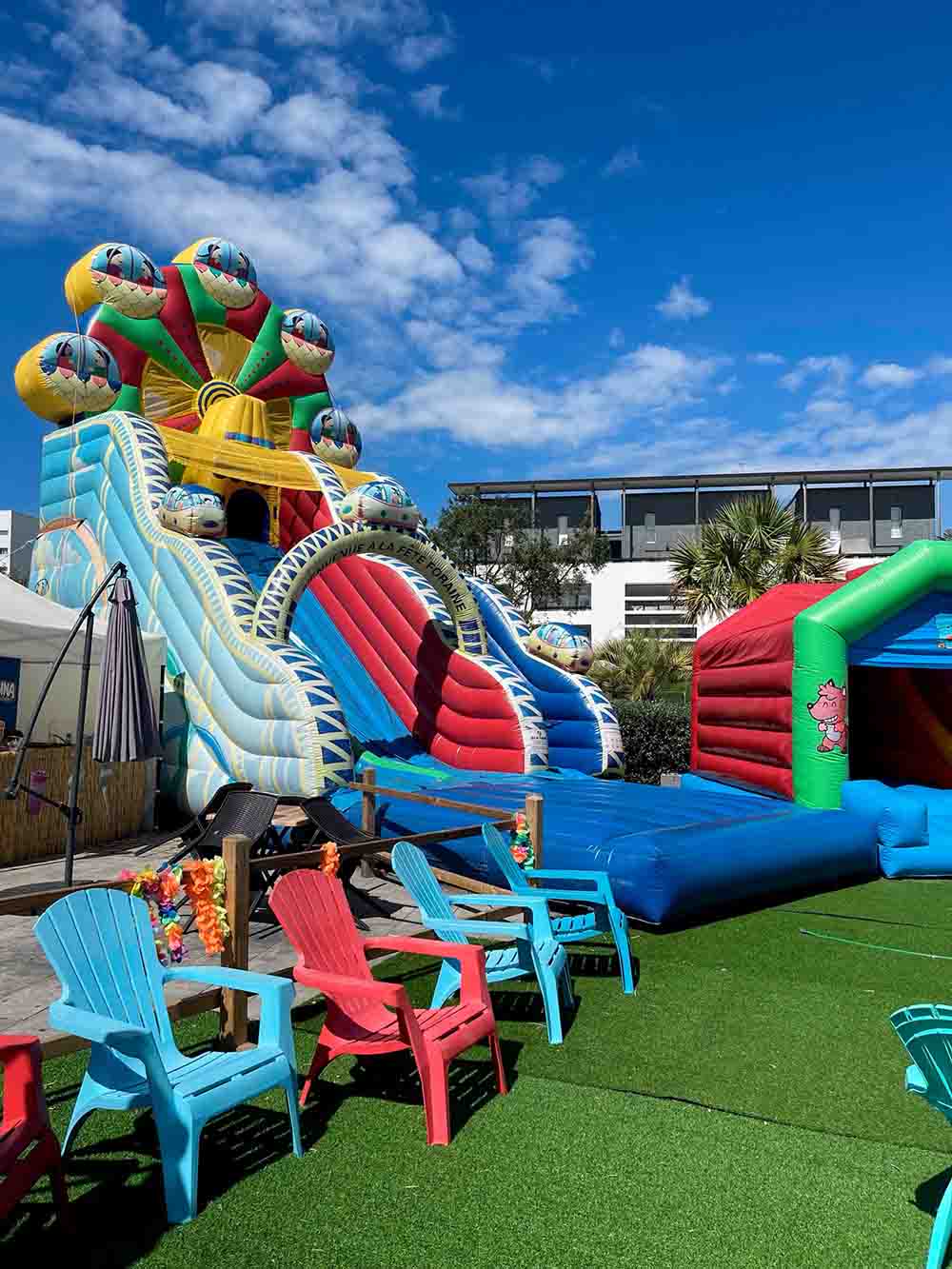
Absolutely! Tear-Aid® will repair your inflatable slide without any problem. In your specific case, order a 150 cm long and 7.5 cm wide roll. If the slide is made from vinyl or a vinyl- or PVC-coated fabric, make sure to order a Type B roll.
In this case, please click here to access our contact form page and we will do our best to respond as soon as possible.
Who knows? Perhaps your question will appear on this page to benefit others who find themselves facing the same issue as you?
What our clients say...
Why choose us?

Fully encrypted shopping offering you complete peace of mind.

Not happy with your choice? Made a mistake? We’re here to help.

Offering quality service & know-how for more than 20 years.